

 VI
VI ID
IDHVAC Energy Optimization Case Study: How Therm-X Modernized Its Chiller Plant with an Energy Management System
04/08/2026HVAC Energy Optimization Is Becoming a Manufacturing Priority
For many manufacturers, HVAC systems account for one of the largest portions of electricity consumption. As electricity prices rise and governments introduce stricter energy efficiency regulations, simply replacing equipment is no longer enough.
HVAC energy optimization today requires continuous monitoring, intelligent control, and operational visibility.
This case study explains how Therm-X partnered with Ampotech to modernize its cooling infrastructure while improving operational control across its manufacturing facility.
About Therm-X
Therm-X SVT is the Vietnam manufacturing arm of a U.S.-based electronics company.
The company operates a 110,000-square-foot ISO-certified manufacturing facility located in Dong Anh Industrial Park, Vietnam.
Like many manufacturing facilities, Therm-X required better visibility into energy consumption and more efficient operation of its chilled water system.
The HVAC Energy Optimization Challenge
Before the project, Therm-X wanted to solve four key operational challenges:
- Limited visibility into facility-wide electricity consumption
- No centralized Building Management System (BMS) for remote monitoring
- Manual chiller plant operation
- Opportunities to improve chilled water system efficiency
Rather than replacing existing HVAC equipment, Therm-X focused on optimizing how the system was monitored and controlled.
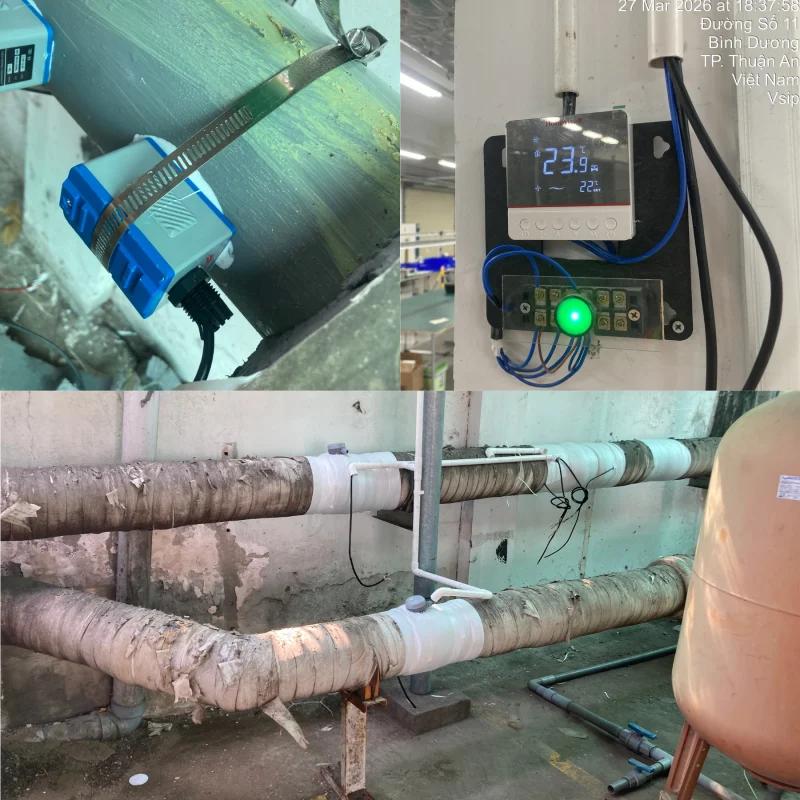
The HVAC Energy Optimization Solution
Ampotech implemented the project in approximately three months without disrupting factory operations.
The project consisted of three phases.
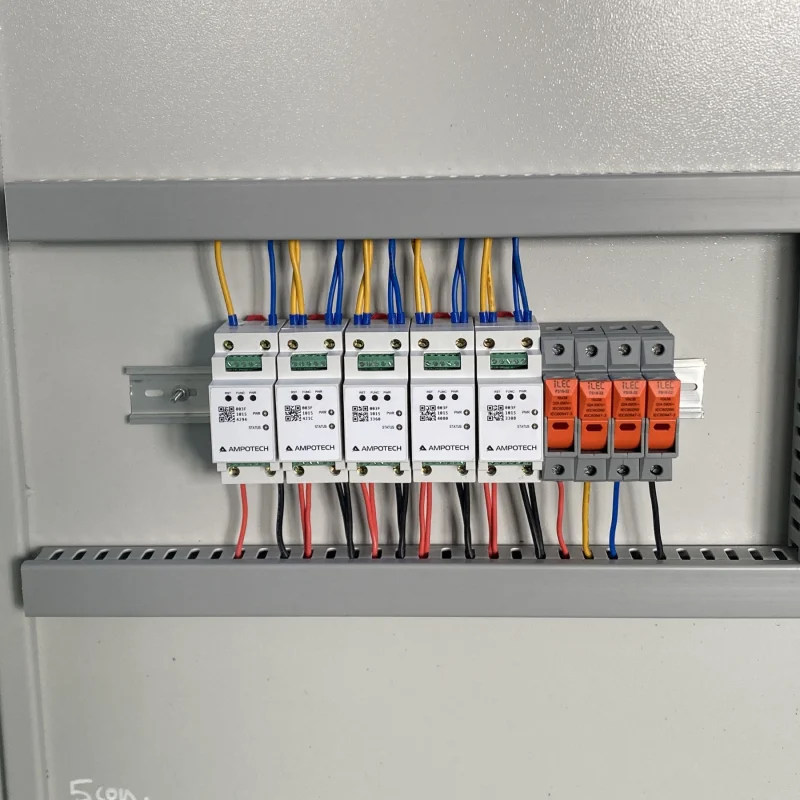
Phase 1 – Energy Submetering
The first step was improving measurement.
Ampotech installed:
- 31 new electricity submeters
- Integration of 7 existing meters
- Centralized Energy Management System (EMS)
This created real-time visibility into electricity consumption across major equipment.
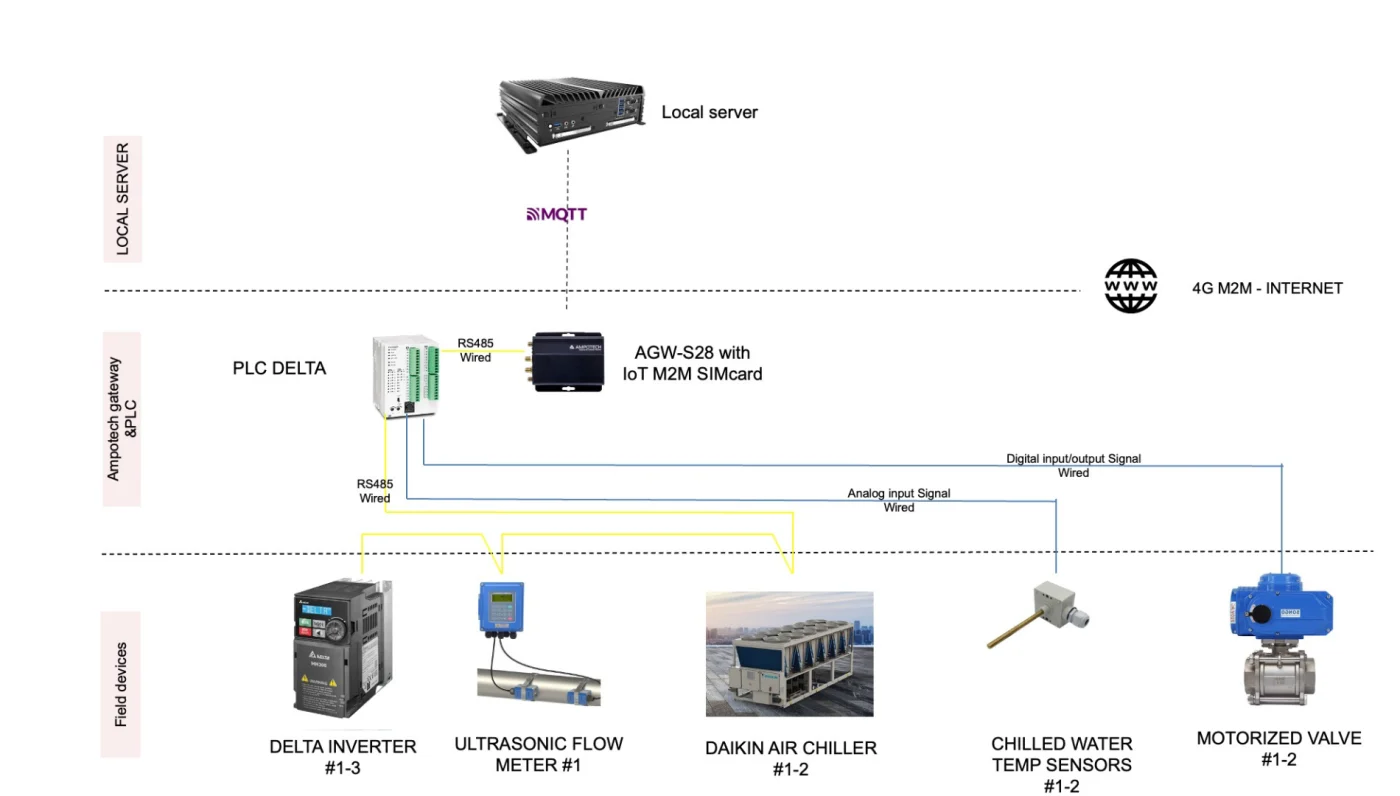
Phase 2 – Chiller Plant Optimization
The cooling system was upgraded with:
- Variable speed drives (inverters)
- Motorized valves
- Flow meters
- Temperature sensors
These upgrades enabled the EMS to continuously monitor and control chilled water operation instead of relying on manual adjustments.
Phase 3 – Airside HVAC Control
The final phase focused on fan coil units (FCUs).
MODBUS thermostats were connected to the EMS platform, allowing centralized control of airside cooling throughout the factory.
Results of HVAC Energy Optimization
After commissioning, the Energy Management System provided several operational improvements.
Better Energy Visibility
Operations teams could visualize:
- Electrical distribution
- Equipment energy consumption
- Facility peak demand
- System anomalies
Instead of reacting to problems after they occurred, engineers could identify abnormal energy use much earlier.
Smarter Chiller Operation
The EMS enabled Therm-X to:
- Schedule cooling equipment
- Avoid unnecessary HVAC runtime
- Manage electricity demand during tariff periods
- Coordinate cooling system operation automatically
These capabilities help reduce unnecessary energy use while maintaining production conditions.
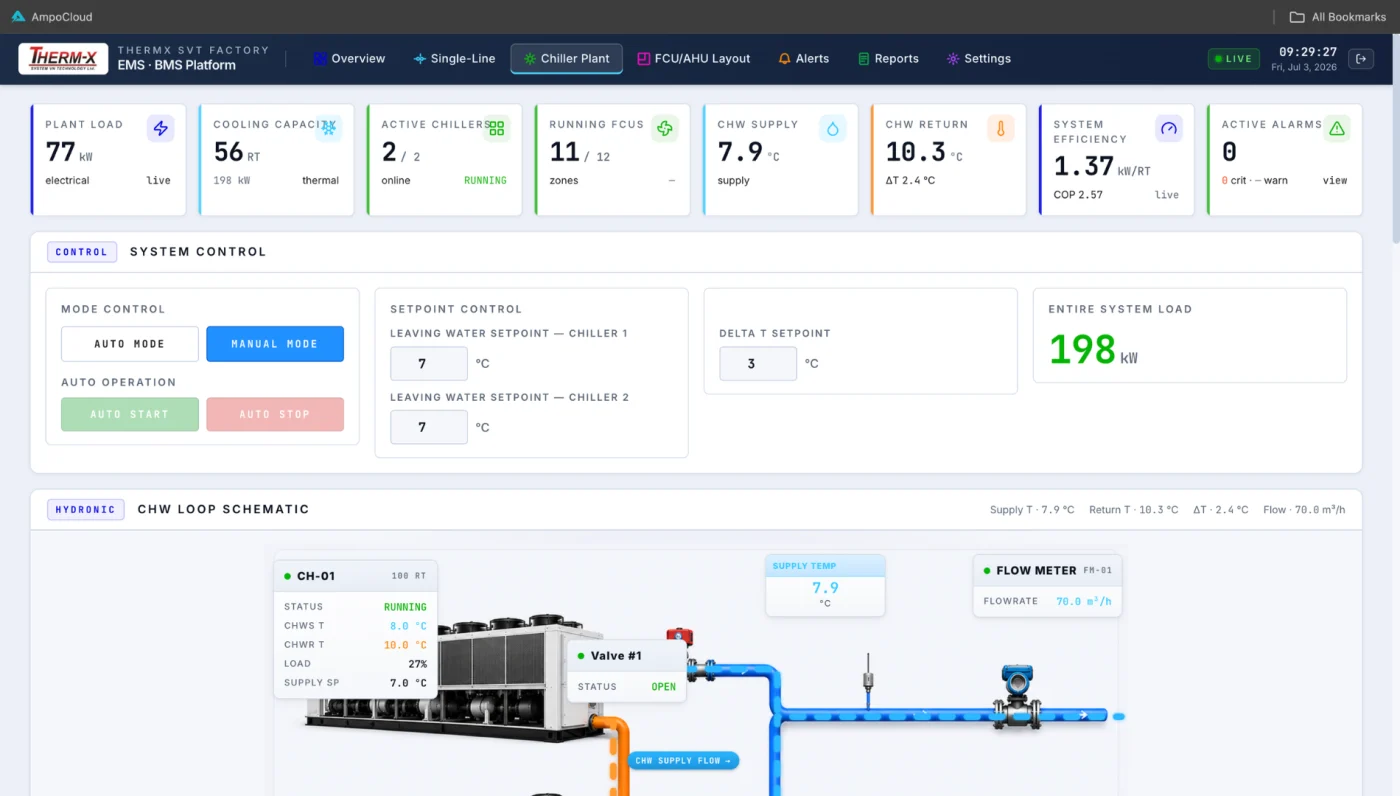
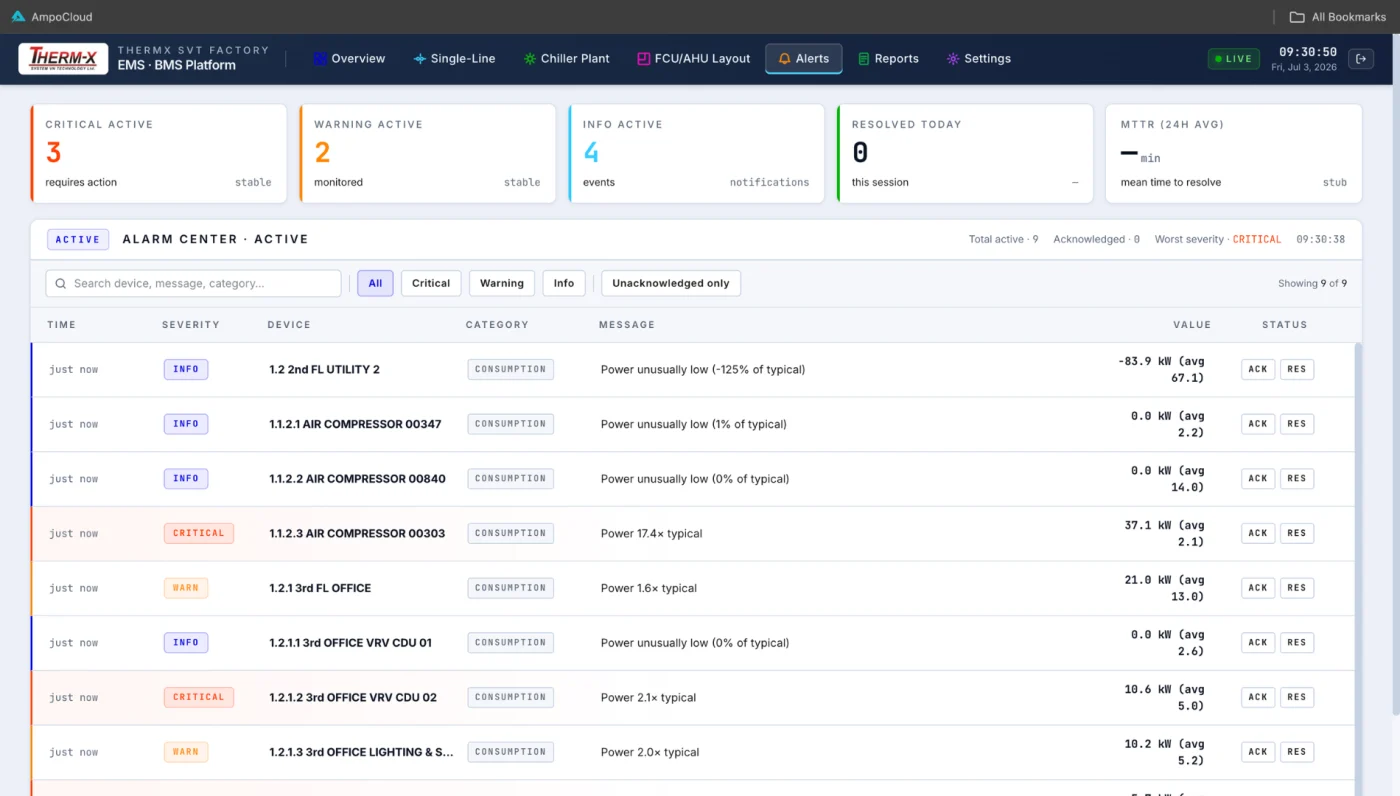
Centralized Monitoring and Reporting
The platform also provides:
- Dashboard visualization
- Alarm notifications
- Automated reporting
- Remote monitoring
- Building Management System functions
According to the Therm-X team:
“Professional with dashboard, data to monitor and report, and alerts to control EMS and control the facility system.”
Why HVAC Energy Optimization Requires More Than New Equipment
One of the biggest misconceptions is that HVAC energy optimization only comes from replacing chillers.
The Therm-X project demonstrates another approach:
Instead of replacing functioning equipment, manufacturers can often unlock significant operational improvements by combining:
- Energy metering
- Building Management Systems
- Automation
- Real-time monitoring
- Data analytics
This allows existing HVAC infrastructure to operate more efficiently without major disruption to production.
Why This Matters for Manufacturers
Manufacturers across Southeast Asia are facing increasing pressure to:
- Improve energy efficiency
- Reduce operating costs
- Meet regulatory reporting requirements
- Lower carbon emissions
An integrated HVAC energy optimization strategy provides the operational data needed to support these objectives while improving day-to-day facility management.
Learn more about energy solutions for manufacturing HERE.
Try Ampotech
Contact our team to experience Ampotech’s energy solutions firsthand.